



MUSEUM OF CONTEMPORARY ART, NATURAL HISTORY MUSEUM AND THE PARK OF ARTS & CULTURE
| Project/architecture | Studio Sadar |
| Program | Exhibition, culture, offices |
| Location | Podgorica, Montenegro |
| Year | 2024 |
| Phase | Open competition |
| Gross floor area | 15.229 m2 |
| Team | Jure Sadar with Danilo Silan and Marko Brkić |
| Visualizations | Items collective |
MASTERPLAN
The competition proposal for the Park of Arts and Culture in Podgorica envisions a central cultural hub with a Museum of Contemporary Art, a Natural History Museum with a botanical garden, and a House of Architecture. Situated between the city center and the Morača River, the site enhances city-river connections.
The design integrates nature, military history, and public use into a cohesive landscape, transforming rigid paths into organic green spaces for cafes and exhibitions. New pathways, inspired by geological strata, improve connectivity, including a western cliffside promenade.
A broad pedestrian and cyclist promenade along Vaka Đurovića Street enhances accessibility. The design preserves existing trees and military elements like cypress trees and ruins. The Botanical Garden, atop an underground garage, extends the Natural History Museum with diverse thematic areas.
Environmental strategies include preserving greenery, optimizing building footprints, replacing parking with green spaces, and reusing materials, fostering a sustainable, culturally rich environment.
MUSEUM OF CONTEMPORARY ART
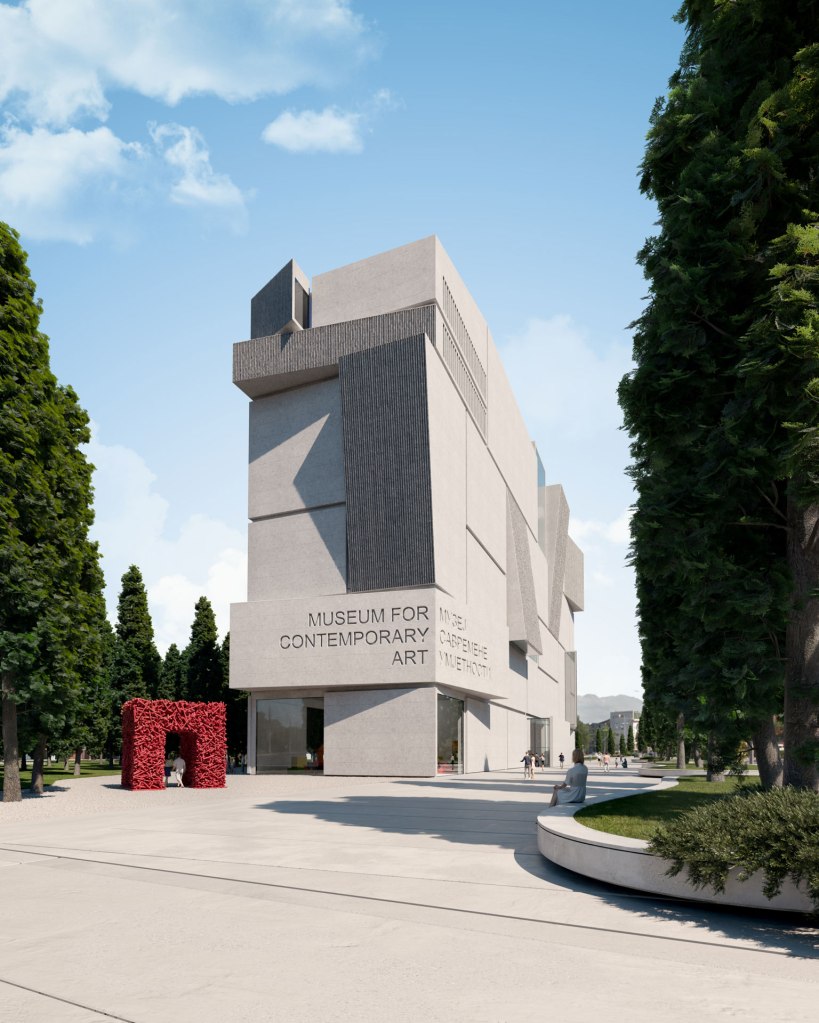
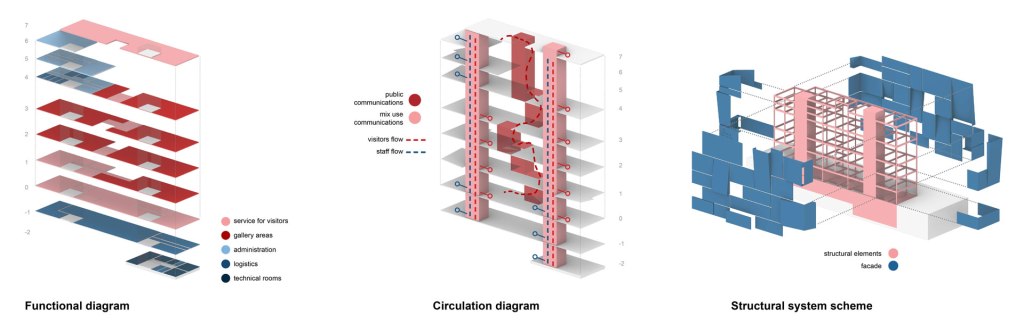
The Museum of Contemporary Art, positioned in the south-eastern corner, is the first phase of the Park of Arts and Culture development. Its high, long slab design, inspired by riverbank boulders, preserves the park while adding to the city’s silhouette.
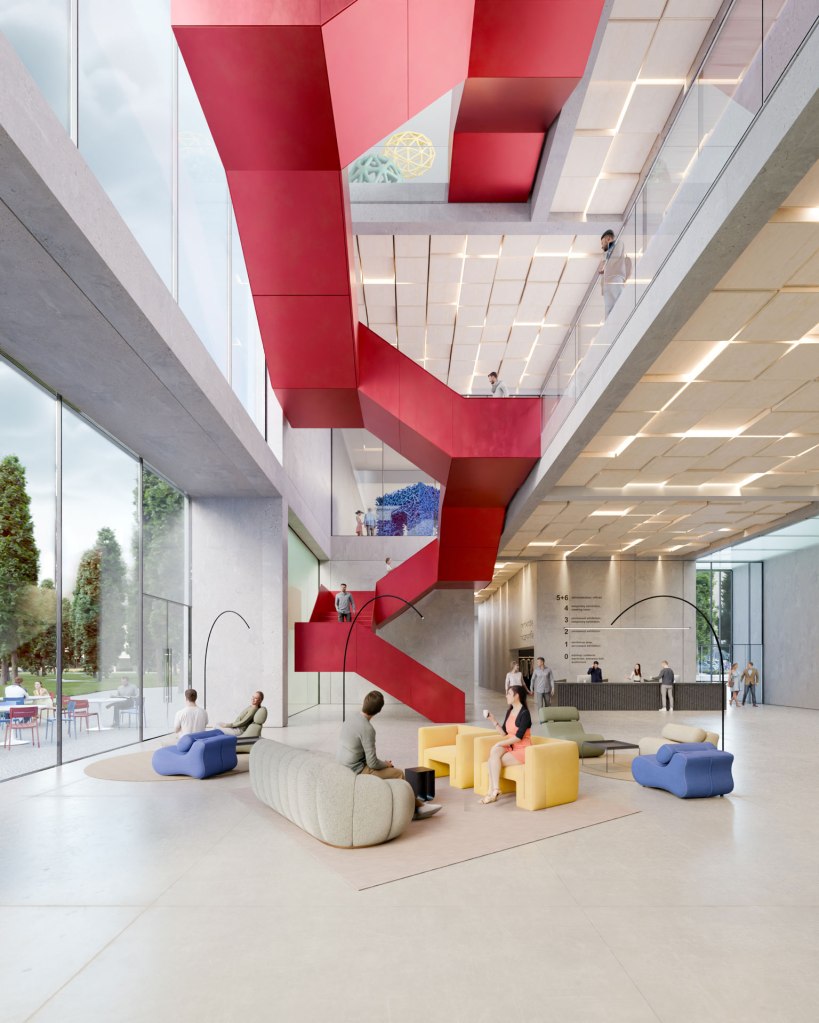
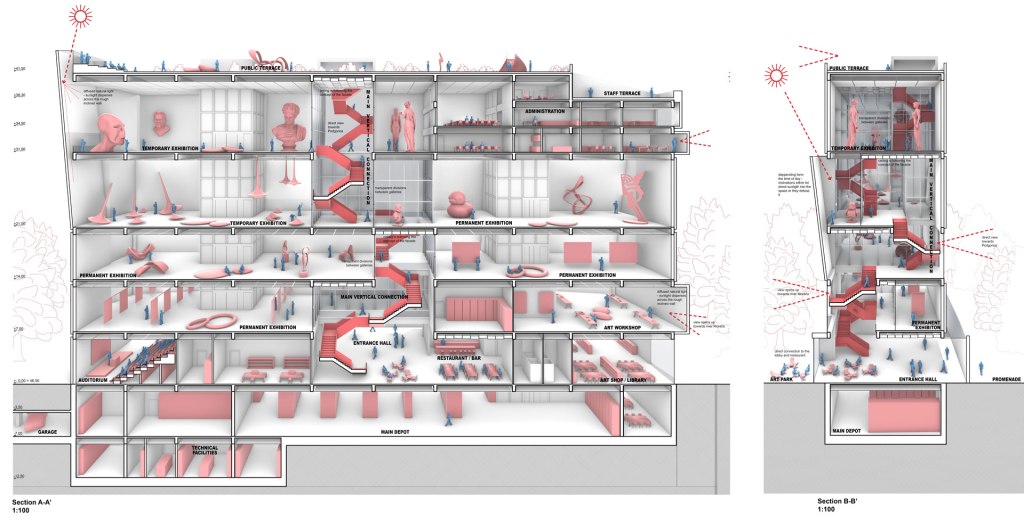
Aligned along Vaka Đurovića Boulevard, the museum features a central lobby entrance, ground floor amenities like a café and auditorium, and upper-floor exhibition spaces connected by a vertical staircase. The roof terrace offers city views and space for outdoor art exhibitions.
Concrete facade with varying textures draws inspiration from the nearby Morača river natural rocks. The gaps between the facade planes enable views, natural lighting and ventilation, while creating distinct exhibition rooms.
NATURAL HISTORY MUSEUM
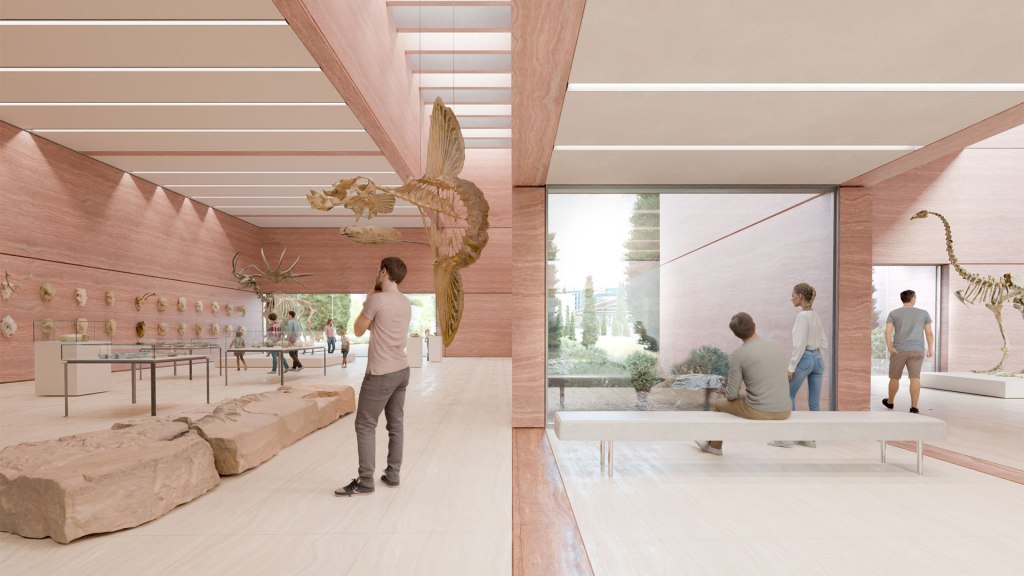
The Natural History Museum, located in a park, features five long slabs inspired by cliff layering. It includes three exhibition and visitor slabs, separated by two service belts with atria for natural light and ventilation.
Public and museum areas, separated by glass panels, remain visually connected, creating a seamless flow from the entrance to the botanical garden. Visitor and exhibition spaces are divided into three parts within the slabs, connected by corridors with garden views. Administrative spaces and a staff terrace are on the first floor of the central slab.
The building uses a visible concrete structure mixed with excavated soil and large glass surfaces to blend with the surroundings. Environmental strategies include natural ventilation, daylight use, water collection, roof photovoltaics, and tree planting in atria.
HOUSE OF ARCHITECTURE
The House of Architecture, situated on a cliff edge overlooking the Morača River, is designed as a series of pavilions or boulders. This design minimizes its perceived size and continues the modernist tradition of pavilions in public green spaces. The boulders are connected by a public space on the ground floor, providing various connections, including a path to Njegošev Park.
Each functional unit is housed in its own boulder and connected by a flexible lobby. The facades are made of recycled brick, emphasizing the building’s fragmented nature. The structure includes cross-laminated timber walls and beams to reduce impact and weight near the cliff, lowering the carbon footprint.
 STUDIO SADAR